¶ Oil Consumption 2.0 TDI: A Chain Reaction Ending in the DPF
¶ The key points at a glance
When a 2.0 TDI starts consuming oil, you hear the same explanation everywhere: the piston rings are worn, and the engine "pumps" oil past them into the combustion chamber. This effect exists, but our research work on real engines shows it isn't the main pathway. Most of the oil takes a different route, one that hardly anyone knows about.
Coked, sticking piston rings no longer seal the cylinders cleanly. As a result, significantly more hot combustion gases blow past the rings into the crankcase on every stroke — the so-called blow-by gases, roughly double the normal value in worn engines. On their way through the narrow ring gaps, these gas flows carry along the oil clinging to the piston and cylinder wall and atomise it into an extremely fine mist. This oil mist is too much, and too fine, to settle in the crankcase or be separated out by the standard ventilation system. It migrates into the intake tract, and the engine draws in its own oil charge as mist and burns it. That is the actual main combustion pathway for the oil.
The consequences chain together: the burnt oil leaves unremovable ash in the particulate filter (our rule of thumb from many cases: after roughly 50 litres of burnt oil, the filter is saturated), regenerations become more frequent, introducing diesel into the oil and diluting it, which produces even more blow-by. Universal aftermarket oil catch tanks don't solve the problem according to our measurements, and full tanks even create new hazards. That's why we're developing our own separator solution, with which, in an extreme test, we reduced the oil consumption of a severely damaged engine from 6.7 to 0.8 litres per 1,000 kilometres.
That was the short answer. The long version explains the complete chain along with the numbers behind it, from the reason the rings stick in the first place, to the question of why a catch tank filled to the brim can destroy an engine in a single second.
¶ The sentence everyone knows, and that isn't quite right
"The rings are shot, the engine's pumping oil through." That's how it's put in a thousand forum posts, that's how many workshops explain it, and it does sound plausible: broken rings, a leaking piston, oil goes up, done. We ourselves considered this explanation sufficient for a long time. Then we started measuring systematically, on engines we bought and disassembled specifically for this purpose, and on vehicles in real-world operation.
The result flipped our picture around. Direct transport of liquid oil across the ring zone into the combustion chamber does happen, but it doesn't account for the amounts of oil these engines lose when damaged. An engine burning 3, 4, or even 6 litres per 1,000 kilometres is receiving this oil by a different route. It draws it in. From the front, through its own intake tract, as mist. To understand how this happens, you have to start at the beginning of the chain, and that isn't where the oil disappears, but where it gets too hot.
¶ Where it all begins: rings bathing in oil that's too hot
The pistons of a turbocharged diesel are cooled from below by oil jets, spray nozzles that direct a permanent stream of oil against the piston crown. What's rarely mentioned: this oil also reaches the ring zone, and if it arrives there at too high a temperature, it does lasting damage. Oil that cokes on a ring groove at 200 to 260 degrees leaves behind hard deposits — coking (we've described the temperature thresholds and the chemistry behind this here).
A piston ring, however, is a precision spring element. It has to be able to work freely in its groove: rotate, breathe, and above all be pressed firmly against the cylinder wall by the combustion pressure building up behind it. If coking fills the groove, the ring sticks fast. And a sticking ring fails in two ways: it no longer presses against the cylinder wall with full force, so it no longer seals the combustion chamber cleanly. And the oil control ring, suffering the same fate, leaves the oil film sitting on the cylinder wall instead of scraping it back into the pan. Together, these two failures are the entry ticket for everything that follows. How a ring grows stuck in its groove, and why a compression test often fails to show it, is explained in Stuck Piston Rings: Why Rings Seize and Burn Oil.
¶ Blow-by: the storm inside the crankcase
On every power stroke, pressures well above 100 bar prevail in a turbodiesel's combustion chamber. Even in a healthy engine, a small portion of the combustion gases pushes past the rings down into the crankcase — that's normal blow-by, structurally unavoidable and accounted for by design. Reference measurements on passenger-car diesel engines show volumetric flows in the region of 60 to 85 litres per minute when new. With worn rings, this value roughly doubles — 125 to 170 litres per minute are documented — and with sticking rings it can become far more dramatic still.
What matters is HOW this gas gets down there: through hairline gaps between ring, groove and cylinder wall, at correspondingly high flow velocity. And this cylinder wall is, by design, always wetted with an oil film — all the more so once the oil control ring is no longer working cleanly and leaves too much film behind. The rushing gas flow does what any fast gas flow over a liquid does: it carries it along and atomises it. The oil film turns into an aerosol, an extremely fine oil mist with documented droplet sizes in the range of 0.1 to 5 micrometres, a significant portion of it under one micrometre.
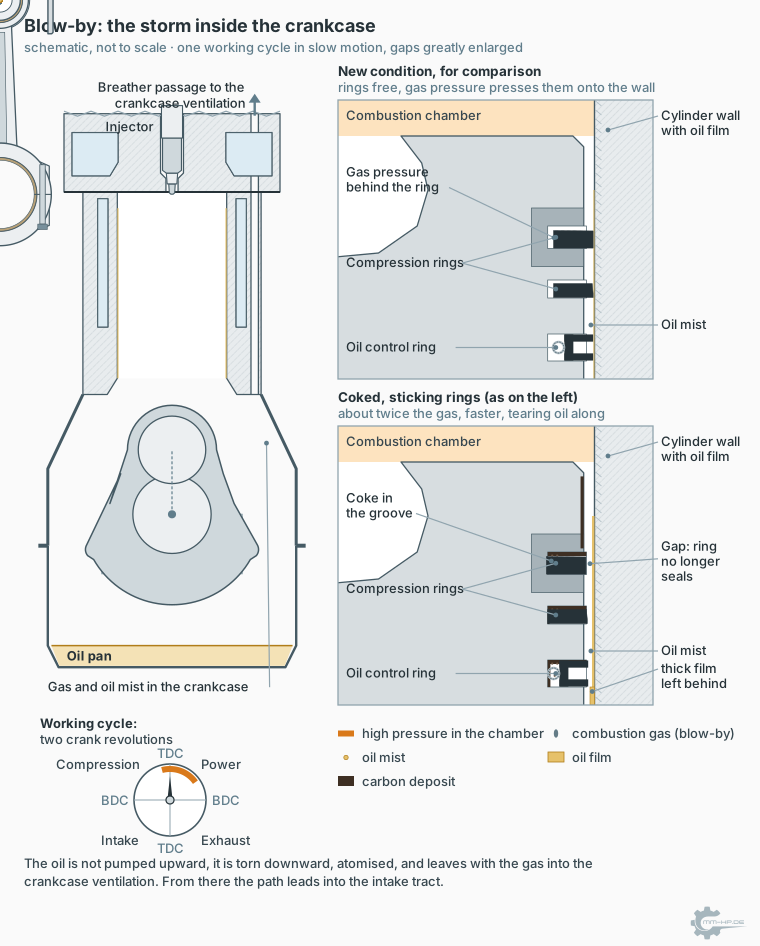
Schematic. At the top the rings in new condition, at the bottom coked and sticking: about twice as much gas shoots through the gaps and tears oil downward as mist.
This is exactly where the difference lies between the forum explanation and what we see in our own investigations. The oil isn't mostly pumped past the ring and UPWARD. It's torn DOWNWARD, atomised, and then embarks on an entirely different journey.
Key point: the main pathway for oil consumption doesn't lead upward as a liquid into the combustion chamber, but as a mist through the crankcase ventilation back into the intake tract.
¶ Can blow-by be measured? Yes, and it's worth it
Blow-by isn't a matter of guesswork — it can be measured precisely, and the engine industry does so routinely. On test benches, a blow-by meter sits at the outlet of the crankcase ventilation and records the gas flow in litres per minute; industrial devices cover measurement ranges from under one to over two thousand litres per minute, and flow meters in the appropriate 20-to-220-l/min class are also available for workshops and dedicated hobbyists. As a rough assessment threshold, the practical literature states that a passenger-car engine blowing more than about 150 litres per minute at full load is considered due for an overhaul — consistent with the wear figures from the chapter above.
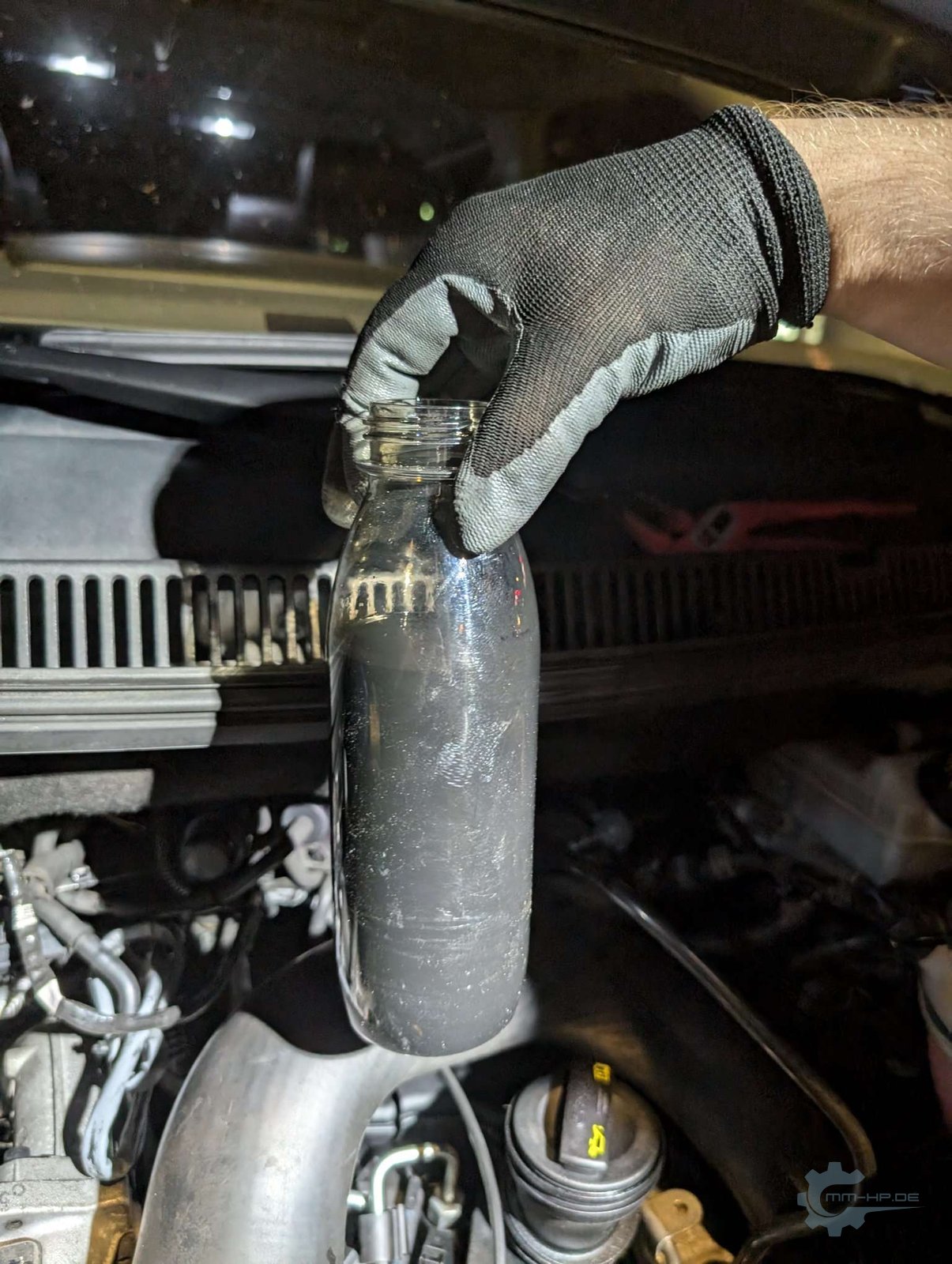
Own photo. What collects in the crankcase ventilation: oil and condensate, caught in a container.
Two findings from measurement practice are especially valuable for owners. First: blow-by is a more sensitive early indicator than compression. It's documented that engines can already show significantly elevated blow-by at higher mileages while the compression test still comes back unremarkable, because the compression test measures a momentary seal during cranking, whereas blow-by measures the actual sealing under operating conditions. Second, there are the classic makeshift tests, and they're better than nothing if you know their limits: with the oil cap test, you watch the gas escaping from the filler neck on a running engine — slight positive pressure is normal, forceful, pulsing blow-out is a warning sign. With the glove test, a disposable glove is stretched over the filler neck; if it inflates like a balloon, something's wrong. Both tests, however, only tell you "a lot or a little," not a number, and they can't distinguish whether the pressure comes from worn rings or from a faulty ventilation system itself. Still, for tracking your own engine over time — the same check once a quarter — they're a free early-warning system.
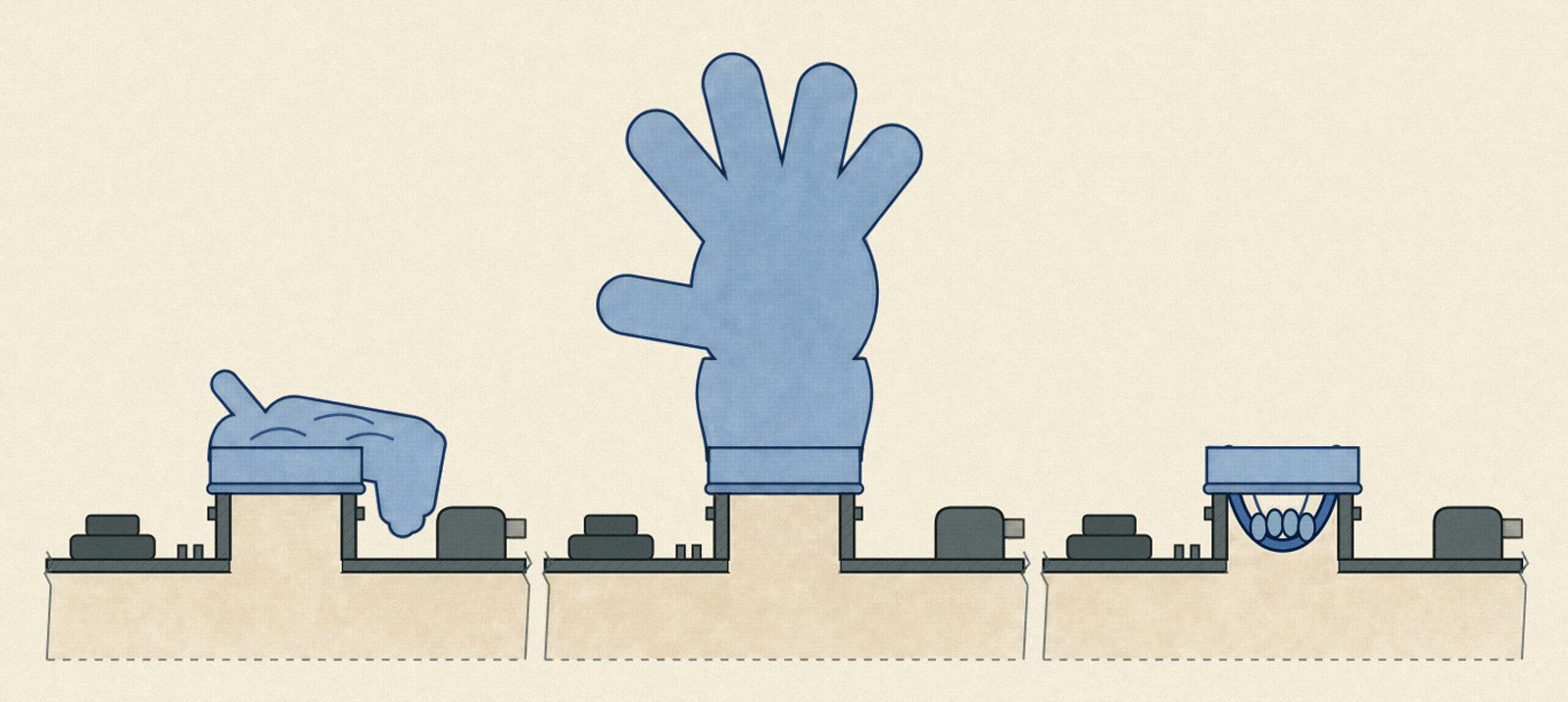
Schematic. Left, normal: the glove stays limp. Middle, heavy blow-by: it inflates tight. Right, torn ventilation diaphragm: it is sucked into the neck, more on that in the chapter on the separator.
¶ Why the standard ventilation system gives up
The crankcase must not build up positive pressure, so every engine has crankcase ventilation that draws off the blow-by gases and, because they carry oil, routes them through an oil separator first, usually a cyclone or labyrinth system designed to fling out the droplets and return the oil to the pan. In a healthy engine, this works properly.
In a damaged engine, this system fails on two fronts at once. First, the volume: the separator is designed for the as-new volumetric flow, not double that. Second, and this is the real crux of it, droplet size: cyclone separators work by separating mass via inertia, and the technical literature states plainly that they can barely do anything with droplets under one micrometre. But the mist from the ring gaps sits exactly in this ultra-fine range. On top of that, there's simply the matter of time: with this much aerosol in the housing, the mist would need time to settle, but the ventilation system draws it off before that can happen.
The result: oil-mist-laden air flows via the ventilation system directly into the intake tract and from there into the combustion chambers. The engine draws in its own oil as suspended particles and burns it along with the fuel. In pronounced cases, you can even hear it: the engine begins to audibly knock because the drawn-in oil-air mixture ignites uncontrollably. By this point at the latest, this engine's main oil consumption runs via the intake manifold, not upward past the rings. Based on everything we've seen over years of measurements and teardowns, this is the dominant pathway in these failure patterns, and it's the reason repair approaches that only look "up top" so often come up empty.
¶ A look inside the separator: how the ventilation system works internally
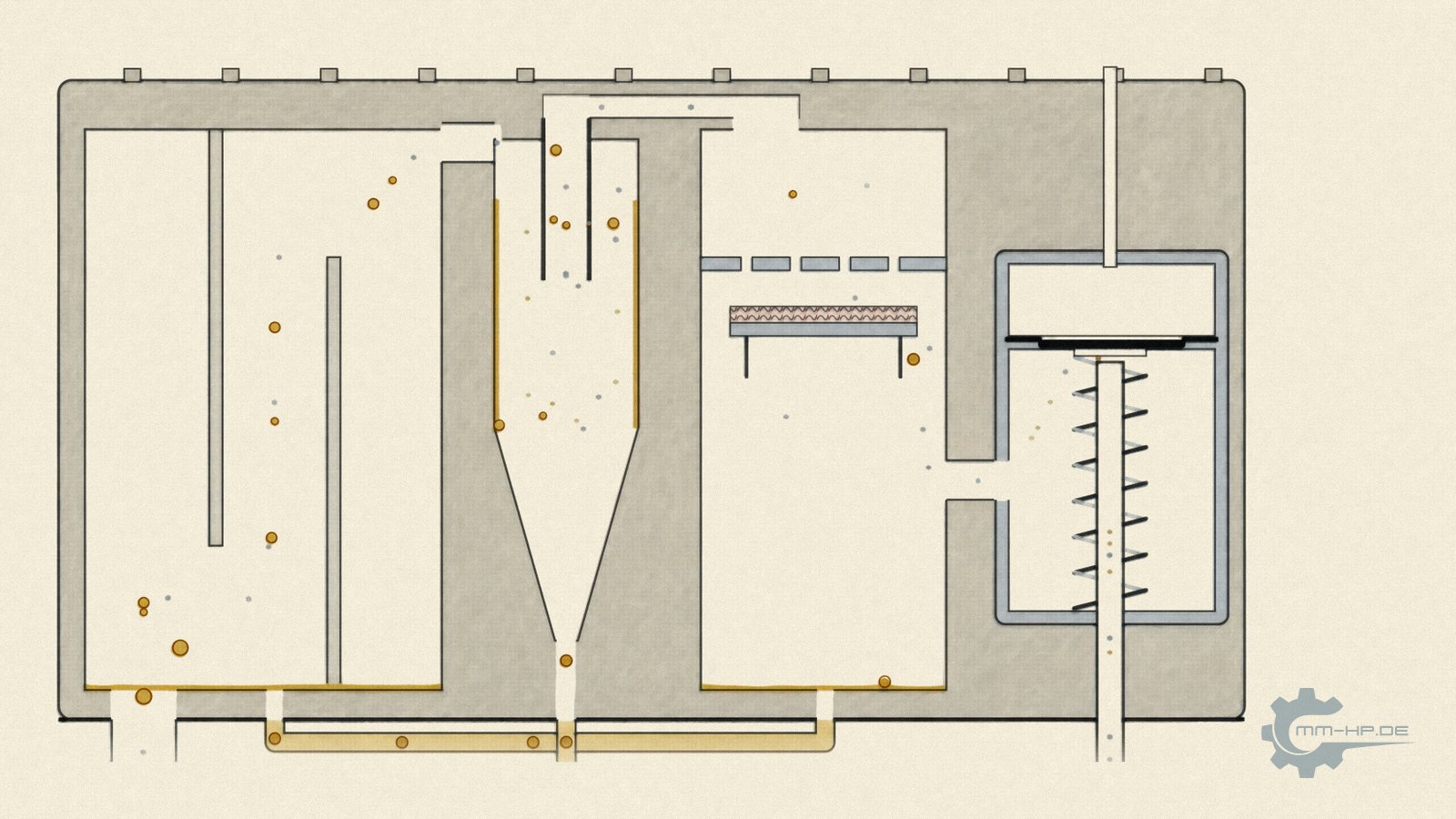
Anyone who wants to understand why the standard system has to fail at fine mist will find it helpful to look at its internal structure, because it's more sophisticated than the word "ventilation" suggests. Modern crankcase ventilation systems work in multiple stages: first, the blow-by gas flows into a settling chamber, where coarse oil droplets simply fall out through gravity and redirection. Then comes the cyclone, which sets the gas spinning and flings the medium-sized droplets against the wall by centrifugal force, where they run off as a film and return to the pan via a return line. More elaborate designs add a fine stage after that, an impact separator or a fleece, in which the finest droplets are meant to merge into larger ones, before a diaphragm-controlled regulating valve balances the crankcase pressure against the intake tract. In the 2.0 TDI, this entire package sits in the cylinder head cover.
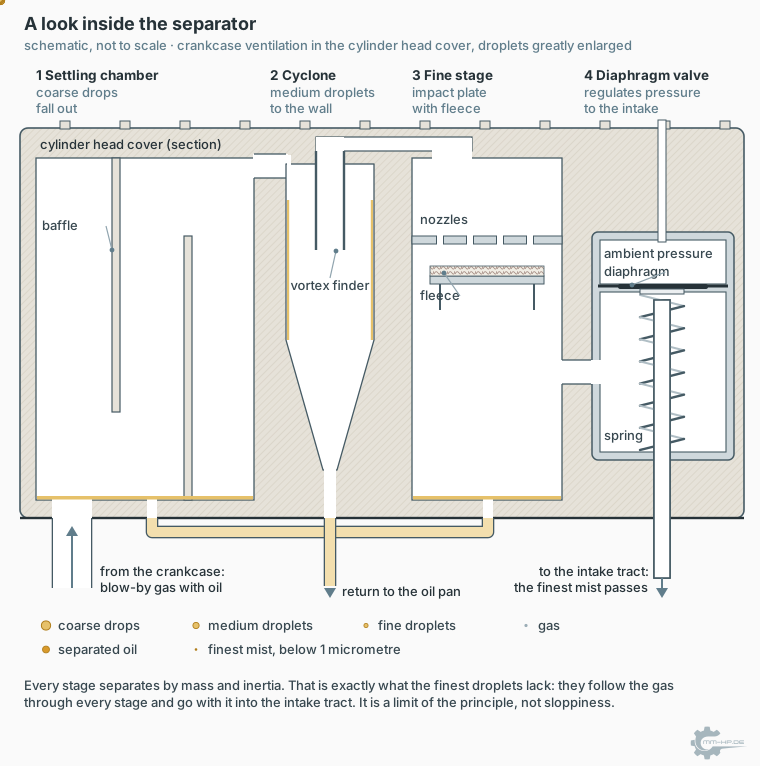
Schematic. Every stage separates by mass and inertia. The finest droplets below one micrometre follow the gas through every stage.
Two consequences follow from this design. First, it explains the failure pattern: every one of these stages separates by mass or inertia respectively, and that's exactly what sub-micrometre droplets lack — this isn't sloppiness, it's a physical limit of the principle. The industry does have electrostatic separators for such fine mists with impressive separation rates, but on an engine's crankcase they're ruled out for a solid reason: a high-voltage ignition source in a flammable oil-air aerosol is documented as a cause of crankcase explosions. So there's no simple "better filter" that the manufacturer merely forgot to fit.
Second, this design produces its own common failure mode, one that must be distinguished from ring wear: the torn diaphragm in this regulating valve. It connects the crankcase and intake tract without any control, with typical symptoms being a whistling at idle, markedly increased oil consumption from suddenly massive mist intake, and a noticeably strong vacuum at the open oil filler neck — the glove from the measurement chapter then doesn't inflate, it gets sucked right in. This failure mode is fixed with a part replacement and should be ruled out in every oil-consumption diagnosis before anyone starts talking about rings or even an engine swap — it's the cheapest suspect in the whole chain.
¶ The chain reaction: how the damage feeds itself
From this point on, the problem stops being linear and starts reinforcing itself. The chain, step by step:
- Burnt oil turns into ash, and ash stays. Soot from normal combustion can be burned off by the particulate filter during regeneration. The additives in engine oil, however, leave sulphate ash behind when burnt, and that's non-combustible. It settles in the filter and stays there for good — no regeneration in the world gets it back out.
- The filter calls for help more and more often. The fuller the filter, the more often the control unit requests active regenerations. Some vehicles end up in a kind of permanent regeneration, often without the driver noticing, with permanently extremely hot exhaust gases placing additional strain on the turbocharger and engine.
- Every regeneration dilutes the oil. The late post-injection needed for this introduces diesel into the engine oil (we've since dedicated a separate article to oil dilution). Thinner oil lubricates worse and evaporates more easily.
- Diluted oil produces more blow-by. The weakened lubricating film seals the ring zone less effectively, wear increases, the gas flows grow further, and with them the atomisation. Back to point 1, one level deeper. The growing wear has a second front too: more abrasive particles in the oil, whose path through the strainer, pump and filter bypass valve deserves a chapter of its own.
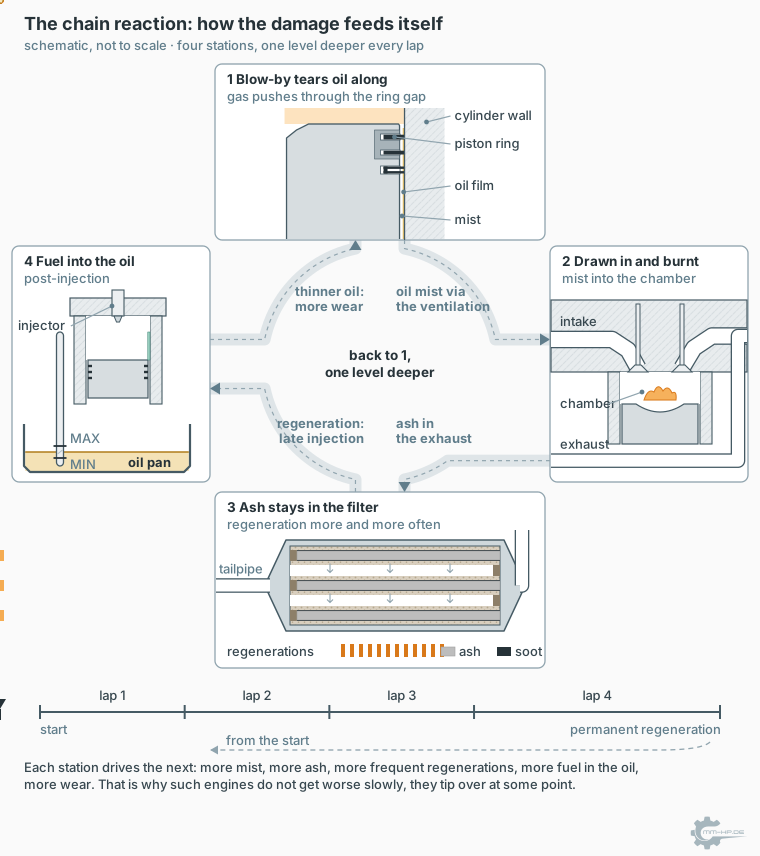
Schematic. Every lap starts one level deeper: more mist, more ash, more frequent regenerations, more fuel in the oil, more wear.
This spiral explains why such engines often don't gradually get worse but rather crash outright past a tipping point. And it explains a rule of thumb we've distilled from many cases we've accompanied: after roughly 50 litres of burnt engine oil, the particulate filter is typically so saturated with ash that it only reports faults or gets stuck in permanent regeneration. So anyone driving 5,000 kilometres at an oil consumption rate of one litre per 1,000 kilometres has sent ten litres through the filter in that time — a fifth of the way to filter death, on top of the actual engine damage.
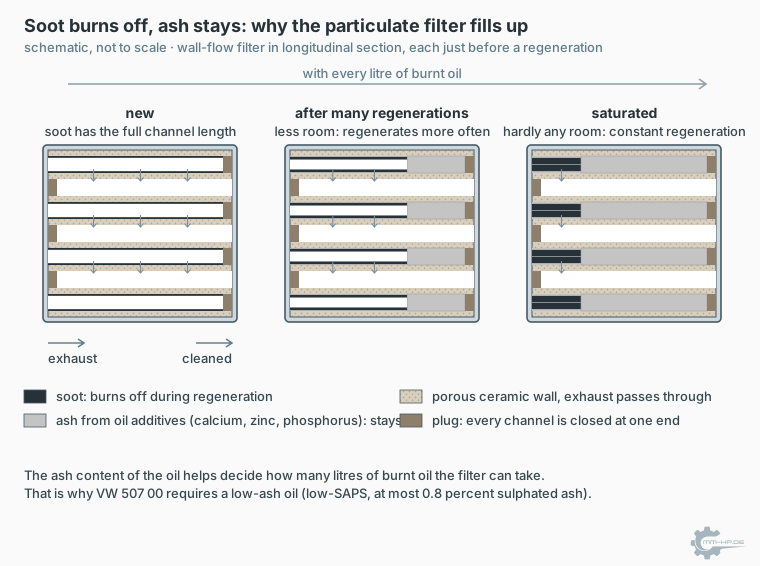
Soot burns off at every regeneration; the ash from the burnt oil stays and grows forward from the channel end. Schematic.
This figure is an empirical value from our own practice, but it can be cross-checked against publicly documented data: the ash storage capacity of typical passenger-car particulate filters is in the region of 250 to 300 grams, and low-SAPS oils, as prescribed for these engines, leave behind roughly 5 to 8 grams of sulphate ash per litre burnt. The division lands at around 30 to 60 litres. That our field-observed rule of thumb sits right in the middle of this window has reassured us in it.
Blow-by also affects the timing chain. In a cold engine, water, acids and fuel condense out of the gases into the oil, and in test-bench trials on a petrol engine, extracting the blow-by gases roughly halved cold-running wear on the chain pins. The measurements are in our article on the timing chain.
¶ Two ways oil destroys an engine in an instant
⚠️ DANGER: oil level and liquid oil in the intake tract. Source of danger: oil is not compressible. If a larger quantity of liquid oil gets into a cylinder, the piston tries, on the compression stroke, to compress something that won't give. Possible consequences: bent connecting rods, broken or tilted pistons, total failure within a single revolution. Measures: keep the oil level exactly to spec (never top up "generously"), top up gradually and re-check when oil consumption occurs, and never keep driving with an oil catch tank filled to the brim (why, is explained in the next chapter).
The first route is overfilling. On engines that consume oil, people top up enthusiastically, and it happens faster than you'd think: too much. If the oil level in the pan sits too high, the rotating parts of the crank drive strike the oil surface at high revs, first the big ends of the connecting rods and, as the level rises further, the crank webs as well. Oil doesn't give way. We've seen cases where the impact forces have literally shattered pistons — a destroyed engine, caused solely by well-intentioned topping up.
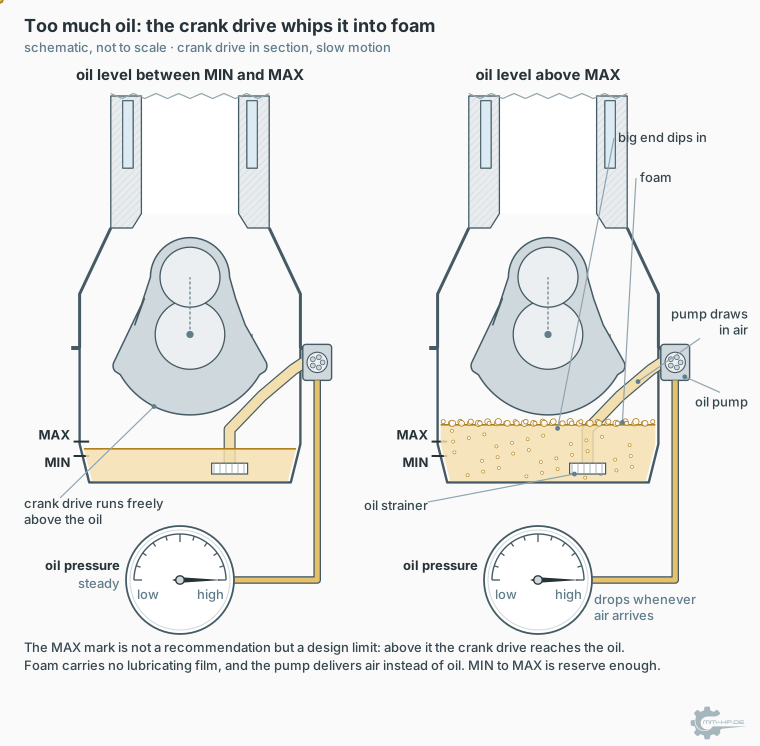
Above MAX the rotating parts of the crank drive reach the oil surface. What that means for lubrication and oil pressure is covered in the article on oil myths. Schematic.
The second route leads via the aftermarket shelf, and that deserves a chapter of its own.
¶ Catch tanks: well intentioned, usually poorly executed
The idea seems obvious: if oil mist migrates into the intake tract via the ventilation system, you fit a container in between to catch the oil — an oil catch tank, which the aftermarket offers in a hundred variants. We've extensively tested such universal solutions, and the results were sobering, on three levels.
First, separation performance. Our measurements show that typical universal tanks fail at exactly the same thing the standard separators fail at: ultra-fine mist. They catch coarse droplets, but the micrometre-scale mist that makes up the lion's share of the problem passes through largely unhindered. The technical literature on droplet-size issues supports this finding; tellingly, there's hardly any solid effectiveness research for universal catch tanks.
Second, maintenance. On a severely affected engine, these containers fill up at a rate nobody expects — in extreme cases during our tests, emptying was needed once per tank of fuel. As a rule, universal solutions have no automatic return of the captured oil to the pan, and no level monitoring either. So nobody knows when it's about to overflow.
And third, the actual danger: the full tank. If the container overflows, liquid oil sits in the ventilation line, and the intake tract's vacuum draws it in — no longer as mist, but as a slug. One gulp of liquid oil in the cylinder, and exactly what the warning box above warns about happens: the oil can't be compressed, the piston slams, bent piston, engine scrap. An accessory part meant to protect the engine becomes a wrecking ball.
Our conclusion from this: we're developing our own separator that addresses exactly these three weaknesses, and we're in the middle of that work right now. It's quite possible the solution is already in our shop by the time you're reading this article. What we can already show is the proof of feasibility from our test runs: an extremely damaged test engine that burned 6.7 litres of oil per 1,000 kilometres came down to 0.8 litres with our separator technology — and that's even below the one-litre-per-1,000-kilometre mark the manufacturer has for decades called still acceptable. In fairness, two things need to be said: this engine was, and remained, a defective engine; separation is damage mitigation, not a cure, and in our view a properly built engine consumes practically no oil at all — we've never understood the manufacturers' one-litre limit as "fine." But as evidence of WHERE the oil is actually being lost, this result is hard to beat: on this engine, almost six litres per 1,000 kilometres took the route through the mist, not upward past the rings.
How our separator works in detail, we're keeping to ourselves until it's market-ready. There's considerably more on this topic in our files than what's written here — measurement series, droplet-size trials, discarded prototypes. We ask for your understanding that we protect this know-how; it came from a great deal of trial work and is an asset of our company.
¶ How to tell where your engine stands in the chain
The value of this chain logic lies in the fact that the observable symptoms let you read off how far an engine already is, and how much time is left:
| Observation | Position in the chain | Assessment |
|---|---|---|
| Oil consumption rising slowly, otherwise unremarkable | Start: rings beginning to stick, atomisation increasing | Best time to act — diagnose the cause instead of just topping up |
| Noticeable oil consumption plus more frequent regenerations (fan run-on, jumps in consumption) | Middle: mist reaching the DPF, ash accumulating | The 50-litre clock is running noticeably, the dilution spiral is beginning |
| Engine audibly "knocking," oil consumption high | Advanced: massive mist intake, oil igniting uncontrollably | No longer something to just watch — continued operation eats the engine and filter at the same time |
| Oil level rising on its own | Dilution phase dominates (diesel in the oil) | Lubricity acutely at risk, oil-pressure issues loom |
| Constant DPF fault messages or a sense of permanent regeneration | End: filter ash-saturated | The filter is lost — now it's only about saving the engine |
Two things stand out in this table. First: the early stages are quiet, which is exactly where people most often "just top up," and exactly where intervening would be cheapest. Second: from the knocking stage onward, the damage overtakes itself — engine and filter then die in parallel, and every week of continued operation pushes the bill higher.
¶ What you can do today
Up to this point, this has been diagnosis at the system level. In practice, that boils down to a short list:
- Document oil consumption, from the first time you notice it, in writing with mileage and quantities. The 50-litre clock keeps ticking in the background.
- Top up exactly, never generously. After the warning box above, that needs no further justification.
- Give it long-distance driving. Complete regenerations, instead of many aborted ones, slow down the dilution spiral.
- Don't keep driving on audible knocking or permanent regeneration — have it diagnosed instead, in the right order and with an eye on both damage pathways, not just the rings.
- Take the temperature side seriously: the coking that starts the whole chain is a temperature problem. Anything that lowers oil temperature attacks the chain at its origin (how strongly our conversion works there, with measurement data).
¶ See also
- More delivery volume, cooler oil: the temperature effect chain
- VW T5 2.0 BiTDI (CFCA): the special case
- Oil pressure too low after a conversion? The most common causes
- We buy engines to take them apart: research at MMHP
- The oil-pressure warning light: what it really tells you, and what it doesn't
Transparency note: MMHP has been developing, testing and manufacturing its own products for the automotive industry for over 25 years, including solutions for the oil supply of VW TDI engines; an in-house oil-mist separator solution is currently in development. The blow-by fundamentals and figures from the literature are documented in our source dossier; the atomisation thesis as the main consumption pathway, the 50-litre rule of thumb, and the test results are the outcome of our own research and measurement work.